Linear actuation, or moving a load in a straight path, can be accomplished using a variety of methods. Each actuator solution has features and performance capabilities inherent in the base technology associated with the actuator.
This paper reviews the six different types of commercially available linear actuators and illustrates how to choose the best solution based on the particular application requirements. The pros and cons of each actuator type and industry examples will be reviewed.
What is Linear Motion
Linear motion is defined as movement along a straight line and can be described mathematically with just one spatial dimension. Linear motion can be uniform (constant velocity or zero acceleration) or non-uniform (variable velocity or non-zero acceleration). The linear motion can be in any direction - vertical, horizontal, or at any angle.
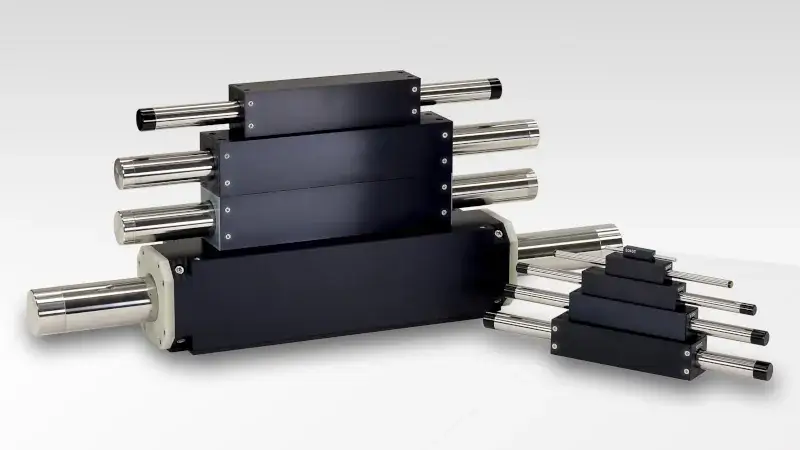
Photo courtesy of Nippon Pulse
Six Actuator Technologies
The six major types of actuators are: Pneumatic Cylinders (rod or carriage style), Hydraulic Cylinders (rod style), Screw Driven Actuators (rod or carriage style), Belt Driven Actuators (carriage style), Linear Motors (carriage or rod style), and Telescoping Actuators.
All these technologies can be operated as either a rod and/or carriage style actuator. Each style has specific capabilities that determine the applications to which they can be applied.
Carriage Style
This style actuator has a carriage or slider that is supported by a rail system braced at both ends. The support structure can consist of a round or profile rail or other slider mechanism that supports the moment load carried by the carriage. Forces applied to the carriage move the load back and forth along the rail system.
Rod Style
This style consists of a rod (typically round), supported by a bushing at the front end, that extends and retracts from the mechanism housing. The rod style actuator is only intended to push or pull a load in the axial direction and does not support side or moment loads.
The Force Source (fluid/air or electric)
How the actuator is driven, is an important consideration for both carriage and rod style actuators. Hydraulic and pneumatic actuators use hydraulic fluid or compressed air that is delivered to the actuator mechanism through a pump or compression system. A control element regulates the air flow and pressure through the actuator to create force and motion. With electrical actuators, power is applied to an amplifier/controller that regulates the flow of current and voltage into the electrical motor to deliver force and motion. Typically, the power and control sources are housed in a control cabinet or machine closet with the power delivered to the actuator via hoses and valves (hydraulics/pneumatics) or cables (electric). With advances in power stages and electronic controls, integrated drive/actuator designs are becoming more popular.
Comparison of Six Different Types of Commercially Available Actuators
1
Pneumatic Cylinders
Pneumatics, as a means to create a force to move objects, emerged in 1829 with the development of the compound air compressor. In 1867, Alfred Beach introduced a pneumatic subway train in New York City that illustrated how passengers could be transported in a vehicle pushed through a tube by pneumatic power. Pneumatic actuators evolved through the industrial revolution and maintain a place in linear actuation today.
In a pneumatic cylinder, air is used to move a piston back and forth in either a rod or carriage style actuator. While the technology is mature, simple, and cost effective, there are distinct advantages and disadvantages to pneumatic actuation systems.
Typical uses include pressing applications, some load carrying applications with simple quick indexing, or applications with high shock loads. The simple design and maturity of this technology helps minimize the upfront costs to implement a pneumatic system in basic applications. The evolution of compressors, valve designs, and sophisticated control electronics allow high speeds and fast accelerations. Basic pneumatic systems are not ideal for precise positioning applications and are not as energy efficient as alternate technologies, which results in higher energy and lifetime costs.
2
Hydraulic Cylinders
Hydraulics, much like pneumatics, evolved into a major industrial technology during the industrial revolution. Blaise Pascal discovered in the 1650's that pressure could be transmitted through a fluid. Early hydraulic cylinders powered by hand pumps were used in cranes, presses, and various industrial machinery.
In a hydraulic cylinder, fluid is used to move a piston back and forth in a rod style actuator. While this technology is also mature, simple, and cost effective, there are distinct advantages and disadvantages to hydraulic actuation systems.
Typical applications include very high force pressing (push/pull), extreme shock loads (like earth movers), and large industrial tractors. Hydraulics are durable and can operate for extended periods if properly maintained. The simple design and maturity of this technology helps minimize upfront implementation costs. When compared to other technologies, hydraulic systems may take more real estate to accommodate the required fluid storage and pumping system, tend to produce higher noise levels, and are not as efficient. Hydraulics can also leak, which creates both maintenance and environmental concerns. The inefficiencies of a hydraulic system, combined with the hydraulic oils required for operation, may necessitate alternatives in industrial applications.
3
Screw Driven Actuators
Photo courtesy of Macron Dynamics
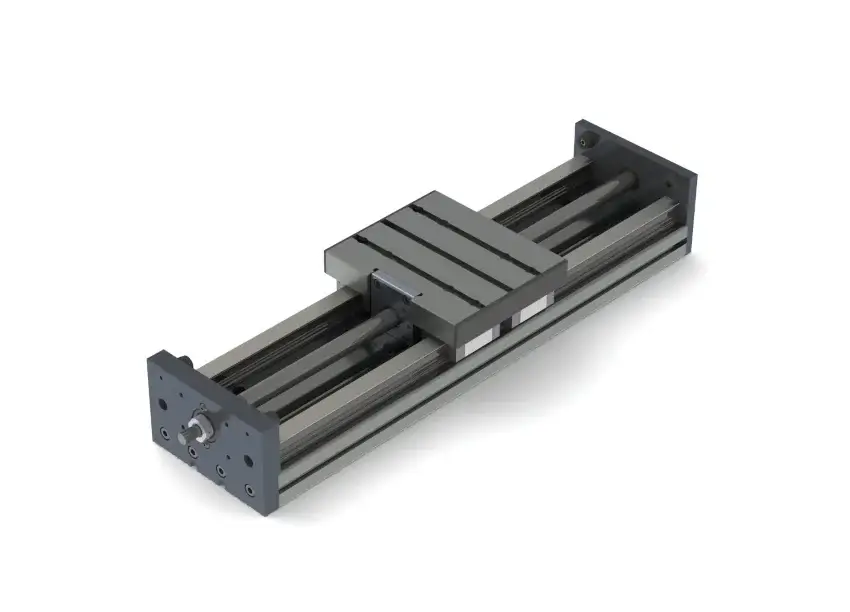
Pneumatic and hydraulic actuators create linear force through controlled fluid/air pressure. Screw driven actuators use mechanical leverage to create a linear force. Screw actuators are driven by an electric motor to rotate a screw. The linear force is created by connecting a nut to the screw and translating the rotary motion of the motor and screw into a linear motion as the nut moves back and forth along the fixed screw.
Screw actuators are excellent for load carrying applications that require high levels of position and speed control; such as machine tools, packaging machinery, converting machinery, and many factory automation and hydraulic applications. Screw actuators are available from extremely small to quite large to handle a wide range of loads. Screw actuators perform comparably to hydraulics at high loads but cannot achieve the highest forces of hydraulics. Their modular design minimizes installation time since no air compressors, pumps, hoses, tubing, or valves are required. The minimal maintenance, since it is limited to the actuator itself, just requires occasional lubrication and inspection for wear and tear. The electric motors used to drive the screws, along with the efficient translation of rotary torque into linear force, provide an overall efficient system.
4
Belt Driven Actuators
Photo courtesy of Macron Dynamics
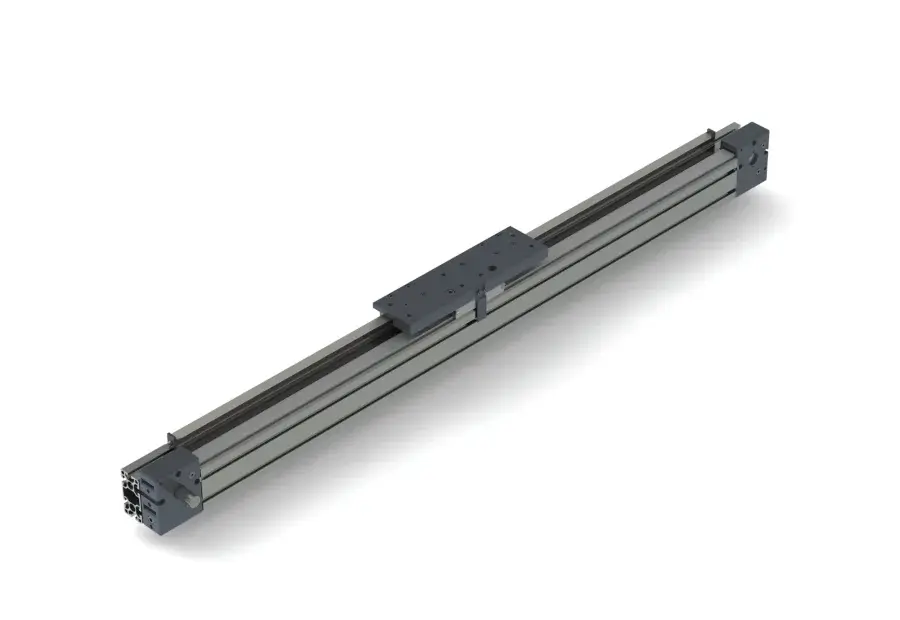
Belt actuators, like screw actuators, are driven using an electric motor. A belt actuator, however, incorporates a belt and pully system instead of a screw. The linear force is created by connecting the belt and pully system to the rotary motion of the motor. The belt then translates to a linear motion as the belt rotates back and forth around the pulleys.
Belt actuators are excellent choices for high-speed indexing applications that require position and speed control, such as multi-axis cartesian and long span gantry systems, but are not recommended for pressing applications. Belt actuators can operate at very high speeds and offer very quick accelerations. The electric motors used to drive the belts, along with the efficient translation of rotary torque into linear force, provides an overall efficient system. While certain types of belts tend to stretch over time, material improvements and new belt technologies have mitigated this issue. Many belt actuators are supplied with pretensioned belts. With proper maintenance, belt actuators can operate over a long-life span.
5
Linear Motor Actuators
Photo courtesy of Nippon Pulse
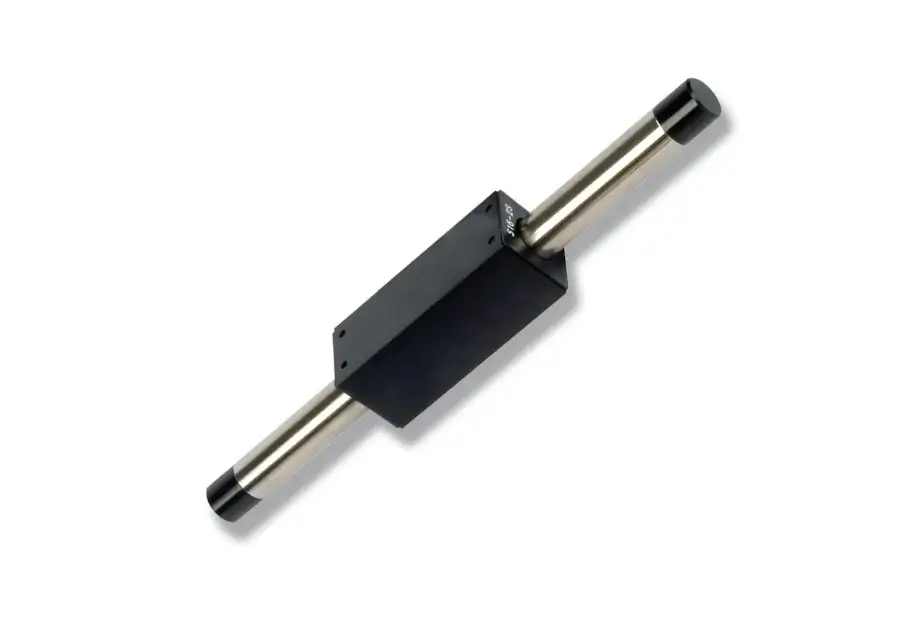
Linear motor actuators are direct drive solutions that contain no mechanical transmission elements. The load is connected directly to the carriage assembly and is moved by the linear motor itself. Linear motors are available in a variety of types, including iron core platen style, ironless T- or U-channel style, or tubular style. Linear actuators are typically based on a BLDC servo motor and utilize linear encoders for position and commutation control.
Depending on the application requirements, the more compact and efficient linear motors are potential alternatives for belt or screw driven actuators and pneumatic or hydraulics systems. They are particularly excellent choices for multi axis cartesian or gantry systems where fast move and settle times and precision is important. Linear motors are capable of very high speeds and quick accelerations and are typically only limited by the available current and capabilities of the linear rails to which they are mounted. Linear motor systems are inherently compact, as many transmission elements are eliminated, and can be constructed with very low profiles for space saving requirements. With reduced energy consumption, efficient linear motors, and the elimination of hydraulic fluids, linear motor actuators are an environmentally friendly approach.
6
Telescoping Actuators
Photo courtesy of Macron Dynamics
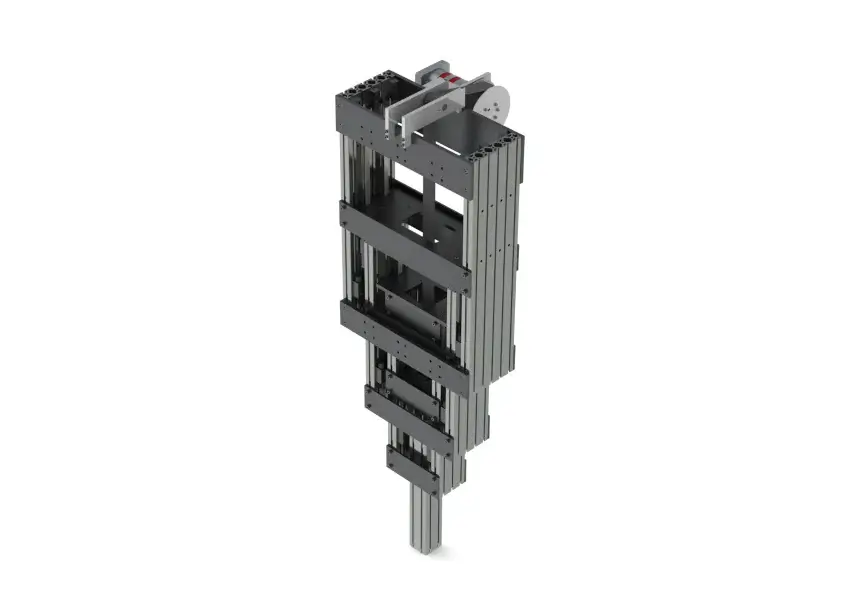
Telescoping actuators are similar to the rod style actuator but are designed to expand to two to three times their collapsed length through imbedded segments within the actuator body. These actuators are typically used in vertical lifting applications to extend or retract a load. They can be screw or belt driven with servo or stepper motors. Pneumatic and hydraulic systems are also a possibility with telescoping actuators.
Typical applications are to raise and lower various loads or to insert or retract parts into another machine process. Depending on the actuation technology, the telescoping actuator can handle mid-load ratings and may use screw or belt actuators to provide rugged designs and extended life. The telescoping actuator is not ideal for horizontal applications due to potential moment load deflection when fully extended.
Linear Actuator Comparison Chart
Comparison of six linear actuator technologies rated by cost, load range, precision, efficiency, and environmental factors using dollar signs for cost and plus signs for performance ratings
Technology
Up Front Costs
Installation and Maintenance Costs
Load Range
Precision
Efficiency
Environment
Pneumatic Cylinders
$
$$$
+++
+
+
+
Hydraulic Cylinders
$
$$$
++++
+
+
+
Screw Drive Actuators
$$
$$
+++
++ to +++
++
++
Belt Drive Actuators
$$
$
+++
++
++
++
Linear Motors
$$$$
$
++
+++
+++
+++
Telescoping Actuators
$$$
$$
+
++
++
+++
Cost:$ = Low cost$$$$ = High cost
Rating:+ = Poor/Low+++ = Good/High
Stay Updated
Want to keep up on Macron Dynamics technical data and updates? Subscribe below.
Related News
Understanding Linear Actuator Technology
hidden
Linear actuation, or moving a load in a straight path, can be accomplished using a variety of methods. Each actuator...
Discuss Your Custom Application with One of Our Owners & Engineers
Macron Dynamics specializes in designing and building virtually any configuration to meet your unique automation needs. Our innovative solutions enhance efficiency, optimize workspace utilization, and prioritize worker safety—reducing injuries while maximizing productivity.
We offer custom solutions for applications requiring from one to thousands of units, and units physically much smaller and larger than our standard models.